
Dentures (Pustiso) Price in the Philippines: 2026 Guide
Ngipen Hub · NgipenHub Editorial Team
July 16, 2026· Last reviewed July 6, 2026
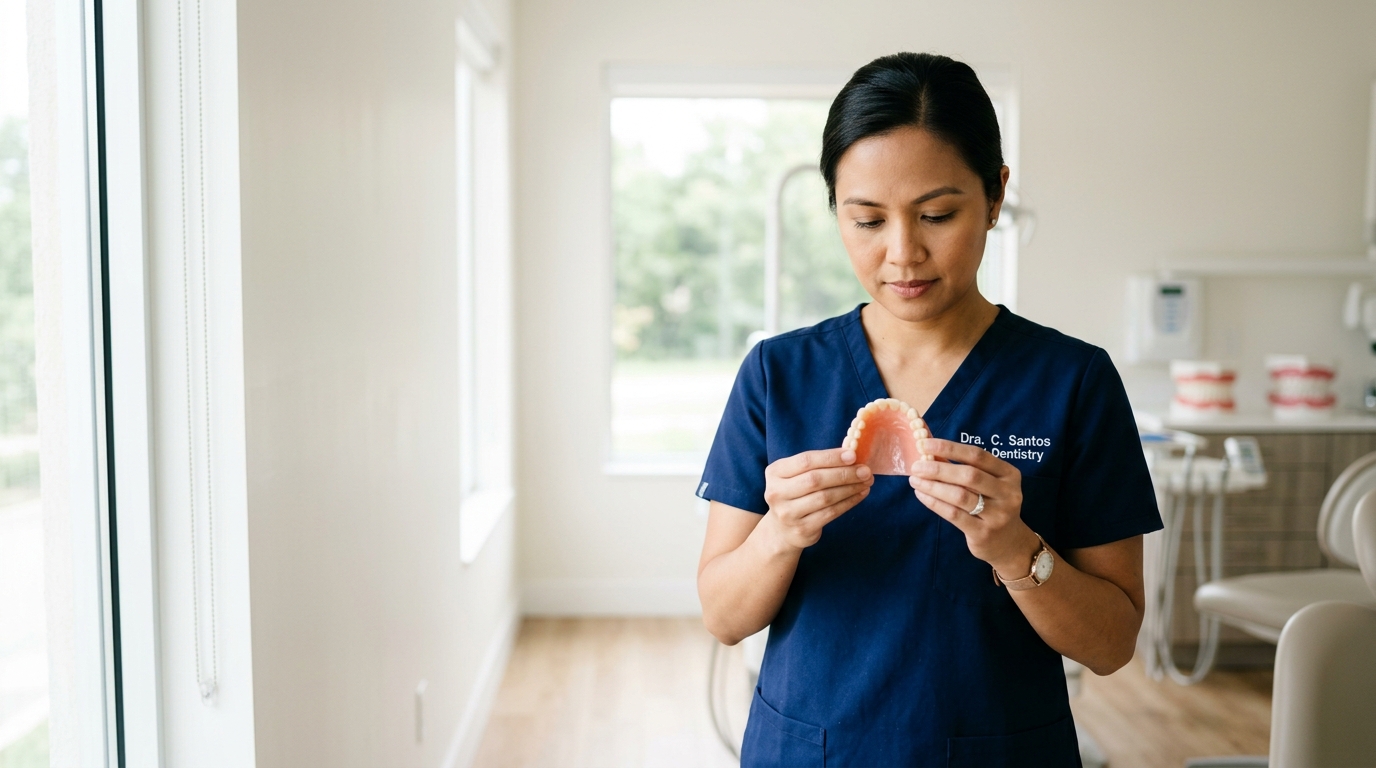
How much does a pustiso cost in the Philippines? As of 2026, a complete denture typically costs ₱10,000 to ₱30,000 per arch at private clinics, while partial dentures start at around ₱5,000. Dental school clinics fabricate complete dentures for as little as ₱5,000 per arch, and several local governments run free "libreng pustiso" programs for seniors.
This guide breaks down current denture prices by type and material, what affects the final quote, where to find cheaper legitimate options, and the discounts the law guarantees you — so you can budget realistically before sitting in the dental chair.
How Much Do Dentures Cost in the Philippines?
Denture Type | Typical Price Range (2026) |
|---|---|
Complete denture (one arch) | ₱10,000 – ₱30,000 |
Complete dentures (upper + lower) | ₱20,000 – ₱60,000 |
Acrylic (plastic) partial denture | ₱5,000 – ₱12,000 |
Flexible partial denture (thermoplastic) | ₱8,000 – ₱20,000 |
Metal-framework partial denture | ₱12,000 – ₱25,000 |
Single-tooth denture | ₱5,000 – ₱12,000 |
Implant-supported overdenture (per arch) | ₱50,000 – ₱80,000+ |
Premium clinics in Makati, BGC, and other high-end Metro Manila locations quote considerably more — complete dentures can reach ₱40,000 to ₱95,000 per arch at top-tier practices. In provincial cities, prices generally run 30–50% below premium Metro Manila rates for comparable work.
What's the Difference Between Denture Types?
Complete (full) dentures
Replace all teeth in an arch. Economy versions (₱10,000–₱15,000) use standard acrylic teeth; standard sets (₱15,000–₱20,000) offer better fit and more natural shading; premium complete dentures (₱20,000–₱30,000 and up) use higher-grade materials and more fitting appointments for comfort and a natural look.
Acrylic partial dentures
The most affordable option for replacing a few missing teeth. Durable enough for daily use but bulkier than the alternatives, with visible metal clasps in some designs. Expect to replace them every 3–5 years.
Flexible dentures
Made from thermoplastic nylon-type materials, flexible partials have no metal clasps, adapt to the shape of your gums, and are harder to spot in conversation. They cost more (₱8,000–₱20,000 for partials; ₱25,000–₱35,000 for a full flexible arch) and cannot be relined as easily as acrylic.
Metal-framework partials
A cast cobalt-chrome skeleton holds the replacement teeth. Slimmer, stronger, and longer-lasting (5–10 years) than acrylic, which is why dentists often recommend them for long-term use despite the higher price.
What Affects the Price of Your Pustiso?
Number of teeth replaced — a single-tooth denture is a fixed unit price (₱5,000–₱12,000); full arches cost the most.
Material — acrylic is cheapest, flexible and metal-framework cost more, premium branded teeth add to the bill.
Extractions first — if remaining teeth must be removed before a complete denture, budget ₱500–₱1,500 per tooth at private clinics (₱300–₱1,000 at government and dental school clinics). See our full guide to tooth extraction costs in the Philippines .
Clinic location and tier — the same denture type can cost two to three times more at a premium Metro Manila clinic than at a provincial practice.
Fitting appointments — well-made dentures need several measurement and adjustment visits; suspiciously cheap quotes often skip them, and poor fit is the top reason dentures end up unworn.
Ongoing Costs: Repairs, Relines, and Replacement
Service | Typical Cost | How Often |
|---|---|---|
Reline (refit against changing gums) | ₱2,000 – ₱5,000 | Every 1–2 years |
Repair (cracks, broken teeth) | ₱1,000 – ₱3,000 | As needed |
Adjustment visit | ₱200 – ₱500 | As needed |
Complete and metal-framework dentures last roughly 5–10 years with care; acrylic and flexible partials typically last 3–5 years. Your jawbone and gums keep changing after tooth loss, which is why relines are a normal part of denture ownership rather than a sign of a defective appliance.
Where Can You Get Cheaper Dentures That Are Still Safe?
Dental school clinics
University clinics — such as the UP College of Dentistry — fabricate complete dentures for around ₱5,000–₱12,000 per arch and acrylic partials from ₱3,000, with supervised student dentists doing the work under licensed faculty. Treatment takes more visits, but the price difference is substantial.
LGU "libreng pustiso" programs
There is no standing national free-denture program, but several local governments run their own: Manila's "Balik Ngiti" program fitted hundreds of seniors with free dentures in 2025, and Laguna, Cavite, Pampanga, and other provinces have run similar "libreng pustiso" initiatives. Ask your city or municipal health office and your OSCA (Office for Senior Citizens Affairs) what's currently available — slots are usually limited and require resident registration.
Senior citizen and PWD discounts
Under Republic Act 9994 (Expanded Senior Citizens Act), Filipinos aged 60 and above get a 20% discount plus VAT exemption on medically necessary dental services — and this explicitly covers the purchase, fabrication, and installation of dentures. Persons with disability get an equivalent discount under R.A. 10754. Bring your senior citizen or PWD ID and ask for the discount before paying; clinics that refuse face fines.
Does PhilHealth or Your HMO Cover Dentures?
PhilHealth does not cover dentures. The preventive dental package introduced in 2025 covers oral exams, cleaning, fluoride varnish, sealants, and emergency extractions — but dentures and other prosthetics are explicitly excluded. A Senate push to add denture coverage was filed in 2024 but has not been enacted as of 2026. Most HMO dental riders likewise exclude dentures as a "prosthodontic" service. Read more in our guides to PhilHealth dental benefits and dental HMO coverage in the Philippines .
Immediate vs Conventional Dentures: Timing Matters
If you still need extractions, you'll choose between two paths. Immediate dentures (₱12,000–₱25,000 per arch) are fabricated before extraction and placed the same day your teeth come out — you never go toothless, which matters for work and confidence. The trade-off: gums shrink significantly while healing, so immediate dentures need a reline (₱2,000–₱5,000) or replacement within months. Conventional dentures are made after the gums have healed — typically six to eight weeks post-extraction — and fit better from day one, but leave you without teeth in the interim. Many dentists suggest an immediate denture now and a conventional one after healing if the budget allows; ask for both quotes.
Dentures vs Implants: When Is Pustiso the Right Call?
Dentures are the budget-friendly option, but they're not the only one. A single dental implant runs ₱65,000–₱220,000 — ten to twenty times a single-tooth denture — while implant-supported overdentures (₱50,000–₱80,000+ per arch) sit in between, clipping a removable denture onto two or more implants for far better stability. The honest comparison:
Choose conventional dentures when budget rules, several or all teeth are missing, or bone loss makes implants complicated.
Consider implant-supported overdentures if a loose lower denture is the pain point — the lower jaw is where regular dentures struggle most.
Consider single implants for one or two missing teeth in an otherwise healthy mouth, where cutting adjacent teeth for a bridge or wearing a one-tooth appliance feels disproportionate.
Making Your Dentures Last: Care That Protects the Investment
Clean daily with a denture brush and mild soap or denture cleanser — regular toothpaste is abrasive and micro-scratches acrylic, which then stains faster and harbors bacteria.
Soak overnight in water or denture solution. Acrylic that dries out warps, and warped dentures stop fitting. Never use hot water — it deforms the plastic.
Rest your gums. Most dentists advise removing dentures at night; round-the-clock wear is associated with gum irritation and fungal infections.
Keep the annual check-up even with full dentures — the dentist checks fit, screens for sores and oral cancer, and catches reline needs before the denture starts rocking.
Don't self-repair. Superglue is toxic, ruins the acrylic for proper repair, and usually turns a ₱1,500 fix into a full replacement.
Frequently Asked Questions
How much is a pustiso for one tooth?
A single-tooth removable denture costs about ₱5,000–₱8,000 in acrylic or ₱8,000–₱12,000 in flexible material. It's priced as one appliance, not per tooth — which is why replacing several teeth with one partial denture costs far less than separate single-tooth appliances.
How long do dentures take to make?
Typically two to five appointments over one to three weeks: impressions, bite registration, a try-in fitting, and delivery. Same-day "instant" dentures exist but usually need earlier replacement and more adjustments.
Are cheap dentures worth it?
A low price is fine when it comes from a dental school or government program — the work is supervised and legitimate. Be cautious with unusually cheap private quotes that skip fitting stages, and avoid unlicensed "denture makers" operating outside clinics entirely: poorly fitted dentures cause sores, bone loss, and end up unworn.
Extraction muna bago pustiso — how much all-in?
For a complete lower denture where, say, six teeth still need removal: extractions ₱3,000–₱9,000 (₱500–₱1,500 × 6) plus the denture at ₱10,000–₱30,000 — roughly ₱13,000–₱39,000 all-in at a typical private clinic, before senior/PWD discounts. Gums need several weeks to heal after extractions before final impressions.
Ready to Get Quotes?
Prices vary widely between clinics, so get at least two quotes before committing. Use NgipenHub to find dental clinics near you , compare services, and book a consultation — and if you're 60+, don't forget that the 20% senior discount on dentures is your legal right, not a promo.
Free tool
Dental Cost Estimator
Build an estimate for your own treatment and see what PhilHealth or your HMO should cover.
Estimate my costFind a Dental Clinic Near You
Browse dental clinics across the Philippines and book an appointment online.
Browse ClinicsDo you run a dental clinic in the Philippines?
Claim or add your clinic to NgipenHub for free and get found by patients in your city.