
Tooth Filling (Pasta) Price in the Philippines: 2026 Guide
Ngipen Hub · NgipenHub Editorial Team
July 23, 2026· Last reviewed July 6, 2026
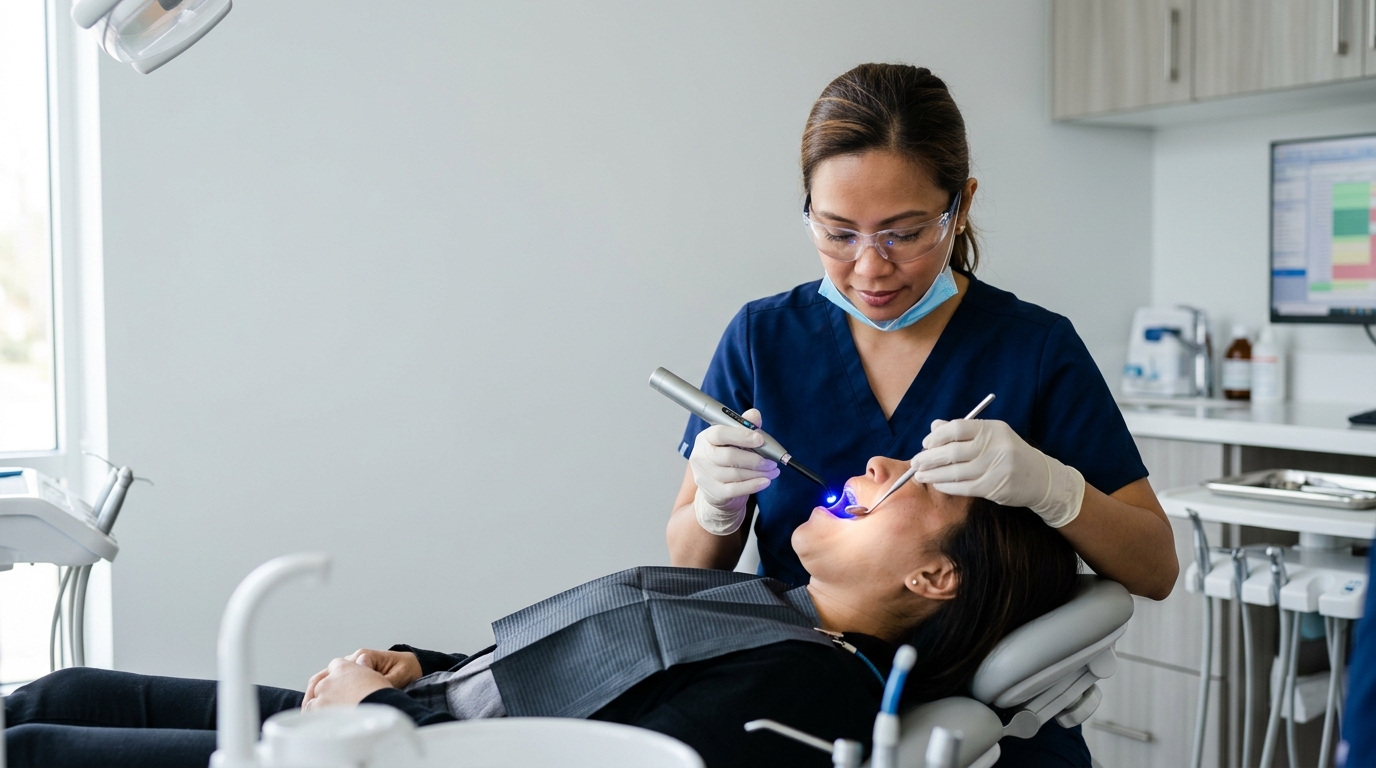
How much does pasta sa ngipin cost in 2026? A composite (light-cure) tooth filling in the Philippines typically costs ₱1,000 to ₱3,000 per tooth at private clinics — small cavities sit at the lower end, while deep or multi-surface fillings can reach ₱4,000. Government hospital dental centers and dental school clinics do it for ₱500–₱1,000, sometimes less.
This guide covers current filling prices by type and cavity size, why quotes differ between clinics, what happened to the old silver (amalgam) pasta, and how to pay less without compromising your teeth.
Tooth Filling Prices in the Philippines (2026)
Filling Type / Size | Typical Price per Tooth |
|---|---|
Composite — small, single surface | ₱1,000 – ₱1,500 |
Composite — medium, two surfaces | ₱1,500 – ₱2,000 |
Composite — large / multi-surface | ₱2,000 – ₱4,000 |
Glass ionomer | ₱800 – ₱2,500 |
Temporary filling | ≈ ₱300 – ₱500 |
Government / dental school clinics | ₱500 – ₱1,000 (composite) |
Note that clinics quote two different ways: most price per tooth , but some larger clinics price per surface (around ₱2,000 per surface at premium practices). A "surface" is one side of the tooth — so a cavity spanning two surfaces costs double under that scheme. Always ask which convention your clinic uses before agreeing.
What Affects the Price of a Filling?
Cavity size and depth — the single biggest factor. A pinpoint cavity needs minutes and little material; a deep cavity near the nerve takes longer and may need extra steps.
Deep-cavity add-ons — a protective liner or base adds ₱200–₱500, and pulp capping (protecting an almost-exposed nerve) adds ₱500–₱1,500.
X-rays — ₱150–₱350 if the dentist needs to check how close decay is to the nerve.
Material and brand — premium composite brands with better shade-matching cost more than economy composites.
Location and clinic tier — the same filling can cost two to three times more at a premium Makati or BGC clinic than at a provincial practice. See our guide on why dental prices vary in the Philippines .
Composite vs Glass Ionomer: Which Pasta Should You Get?
Composite (light-cure) — the standard
Tooth-colored resin hardened with a curing light. Strong, natural-looking, and suitable for both front and back teeth. This is what most Filipino clinics mean by "pasta" today, and it's the default recommendation for permanent teeth.
Glass ionomer
Releases fluoride, bonds chemically to the tooth, and needs less drilling — often used for baby teeth, root-surface cavities, and non-load-bearing areas. Slightly cheaper but wears faster than composite on chewing surfaces.
Temporary fillings
A soft cement placed to calm a tooth down or seal it between appointments (for example, mid-root-canal). At roughly ₱300–₱500 they're cheap — but they are not a permanent fix, and leaving one in for months invites the decay to continue underneath. If you needed a temporary filling as an emergency measure, budget for the definitive restoration soon after.
What Happened to Silver (Amalgam) Fillings?
The classic silver-mercury pasta is no longer legal to place in the Philippines . The Department of Health ordered a phase-out under Administrative Order 2020-0020 — banning amalgam use in children 14 and under and pregnant women immediately, and ending all clinic and dental school use when the transition period lapsed in 2023. The FDA separately banned the manufacture and sale of dental amalgam capsules in 2022, in line with the global Minamata Convention on mercury.
If you still have old silver fillings, there's no need to panic — intact amalgam is not considered an active hazard, and dentists generally advise replacing them only when they crack, leak, or the tooth decays around them. New cavities, however, will be filled with composite or glass ionomer.
Does PhilHealth or Your HMO Cover Fillings?
PhilHealth: mostly no. The preventive oral health package introduced in 2025 covers oral exams, cleaning, fluoride varnish, sealants, and limited Class V restorations (up to two teeth) with a benefit cap of around ₱1,000 per year — but routine cavity fillings are not covered. Details in our PhilHealth dental benefits guide .
HMOs: it depends on your plan. Many corporate HMO dental riders cover only temporary fillings or cap you at one to two permanent fillings a year; some exclude fillings entirely. Check your benefit booklet or ask HR before assuming your pasta is free — our dental HMO guide explains what's typically included.
How to Pay Less for Fillings
Don't wait. A ₱1,200 small filling left untreated becomes a ₱8,000–₱20,000 root canal or a ₱500–₱1,500 extraction followed by an even costlier replacement tooth. Cavities only get more expensive.
Dental school clinics. University clinics in Metro Manila and major provincial cities place supervised composite fillings free or at nominal cost (X-rays charged separately). Treatment takes longer per visit.
Government hospital dental centers charge roughly half of private rates for composite.
Senior citizens and PWDs get 20% off plus VAT exemption on fillings under R.A. 9994 and R.A. 10754 — bring your ID.
Get a per-tooth quote in writing when multiple teeth need work; many clinics discount multi-tooth treatment plans.
What Happens During a Filling Appointment?
Knowing the sequence takes the anxiety (and the mystery fees) out of the visit:
Examination and X-ray if needed (₱150–₱350) — the dentist confirms how deep the decay runs and whether the nerve is involved.
Anesthesia for deeper cavities — a topical gel then local anesthetic. Small surface cavities often skip this entirely.
Decay removal — the dentist drills out softened, infected tooth structure. This is the step that determines your final price: what looked small on the surface sometimes spreads underneath.
Layered composite placement — resin is applied in layers, each hardened with the blue curing light, then shaped to your bite and polished.
A single filling takes 20–45 minutes. If the dentist finds the decay has reached the pulp mid-procedure, expect the conversation to shift toward pulp capping (₱500–₱1,500) or root canal — which is exactly why cheap-and-early beats expensive-and-late.
When a Filling Isn't Enough
Fillings restore small-to-moderate cavities. Beyond that, the escalation ladder — and the price cliff — looks like this:
Very large cavity, nerve still healthy: the tooth may need a crown to hold together — composite alone can't structurally carry a mostly-hollow tooth.
Decay reached the nerve: root canal treatment plus a crown. This is the ₱15,000–₱40,000 outcome the ₱1,500 filling would have prevented.
Tooth too far gone: extraction , then a replacement decision (denture, bridge, or implant) that costs more than every option above it.
If a dentist recommends a crown or root canal where you expected a pasta, ask to see the X-ray and have them point out the decay's depth — a legitimate recommendation comes with visible evidence, and a second opinion on a ₱20,000 plan costs one ₱500 consultation.
Making Fillings Last Longer
Avoid chewing ice and hard candy — the top killers of composite margins.
Night grinders should mention it — bruxism cracks fillings early; a night guard protects hundreds of pesos of dental work per tooth.
Keep the yearly cleaning — decay around a filling's edges ("recurrent caries") is the most common reason replacements are needed, and it's caught early at routine visits. Cleaning prices are in our prophylaxis cost guide .
Sensitivity beyond two weeks isn't normal — a quick bite adjustment visit (often free within the guarantee period; ask your clinic) fixes most cases.
Frequently Asked Questions
Magkano ang pasta sa ngipin ngayon?
For a typical small-to-medium cavity: ₱1,000–₱2,000 per tooth at most private clinics in 2026. Budget clinics start around ₱600–₱800, government and dental school clinics ₱500–₱1,000, and premium Metro Manila clinics charge ₱2,000+ per surface.
Does getting a filling hurt?
Small cavities are often filled without anesthesia at all. Deeper ones are numbed with local anesthetic — you'll feel pressure and vibration, not pain. Sensitivity for a few days afterward is normal; pain that worsens is not, and warrants a return visit.
How long does a composite filling last?
Typically 5–10 years, depending on cavity size, bite forces, and oral hygiene. Regular check-ups catch failing fillings early, when repair is still cheap.
Can I just ask for a temporary filling to save money?
Only as a stop-gap. Temporary cement wears out in weeks to months, and decay continues underneath. It's cheaper in the long run to get the permanent filling — or to use a dental school clinic if budget is the constraint.
Find a Clinic for Your Filling
Filling prices are quote-based, so a quick consultation (₱300–₱700, sometimes waived with treatment) gets you a real number for your tooth. Browse dental clinics on NgipenHub to compare services and book online — and deal with that cavity while it's still a small bill.
Free tool
Dental Cost Estimator
Build an estimate for your own treatment and see what PhilHealth or your HMO should cover.
Estimate my costFind a Dental Clinic Near You
Browse dental clinics across the Philippines and book an appointment online.
Browse ClinicsDo you run a dental clinic in the Philippines?
Claim or add your clinic to NgipenHub for free and get found by patients in your city.